ZONE2 FPV ROCKET RC LIFTING BODY
A true lifting body, matching the awkward specifications of what such a design should imply. As there is no need to have a lifting body without a rocket engine, nor the need to glide. This means a wide range of Reynolds is involved, so i had to design my own airfoil, blending them together with a twist along the 'wing/half-body'. Now the thick trailing edge means a huge drag. That's good thing for stability when using the rocket engine, but quite a poor one when it comes to gliding (it simply helps slowing down). As a result, specs are as follow: lengh: 400mm, wingspan: 170mm, loaded weight: 800g, stalling speed: 80km/h, finesse:5+. It needs to be printed using FDM/PLA.
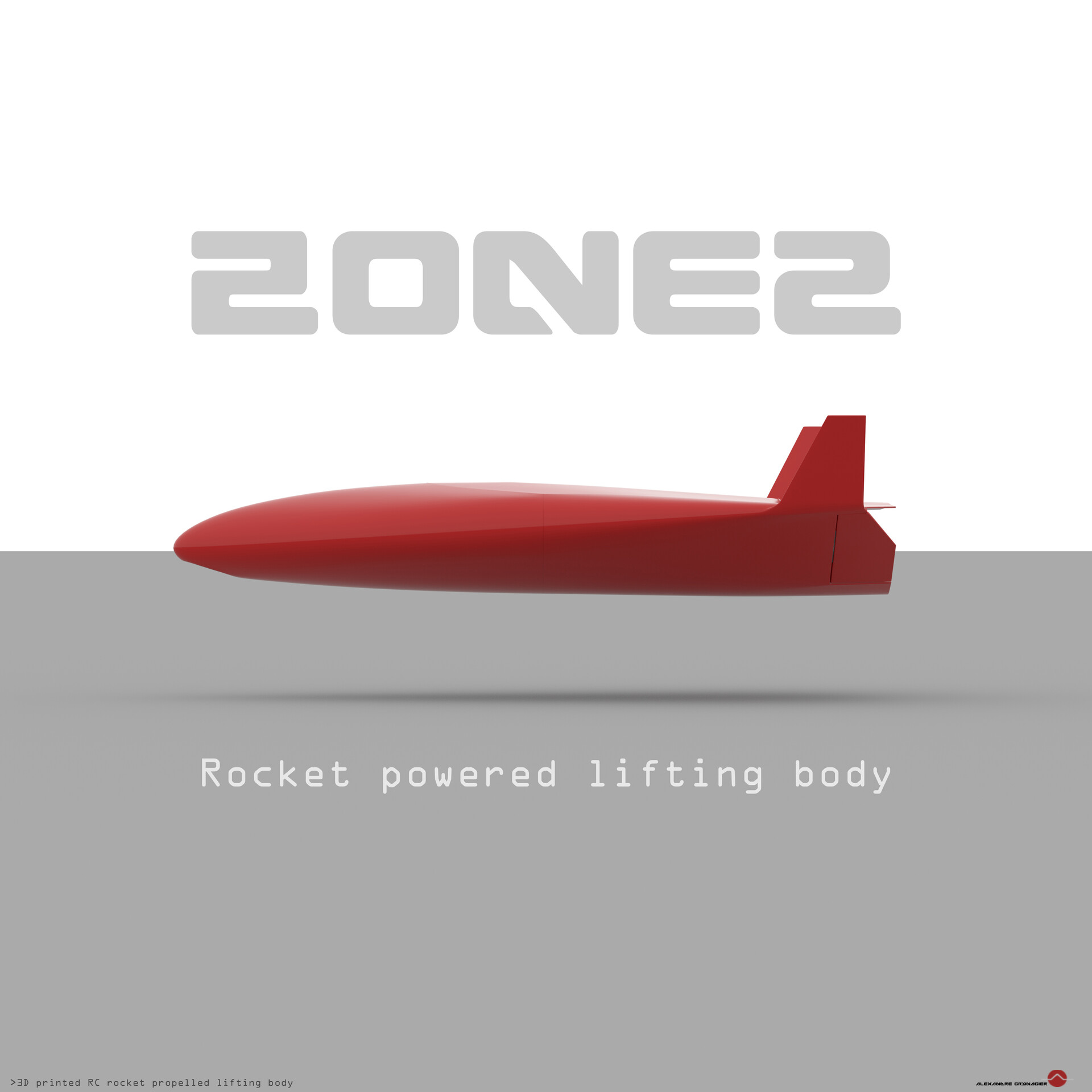
The side view shows how thick the airfoil can be. Not an ideal configuration, but not much choice...
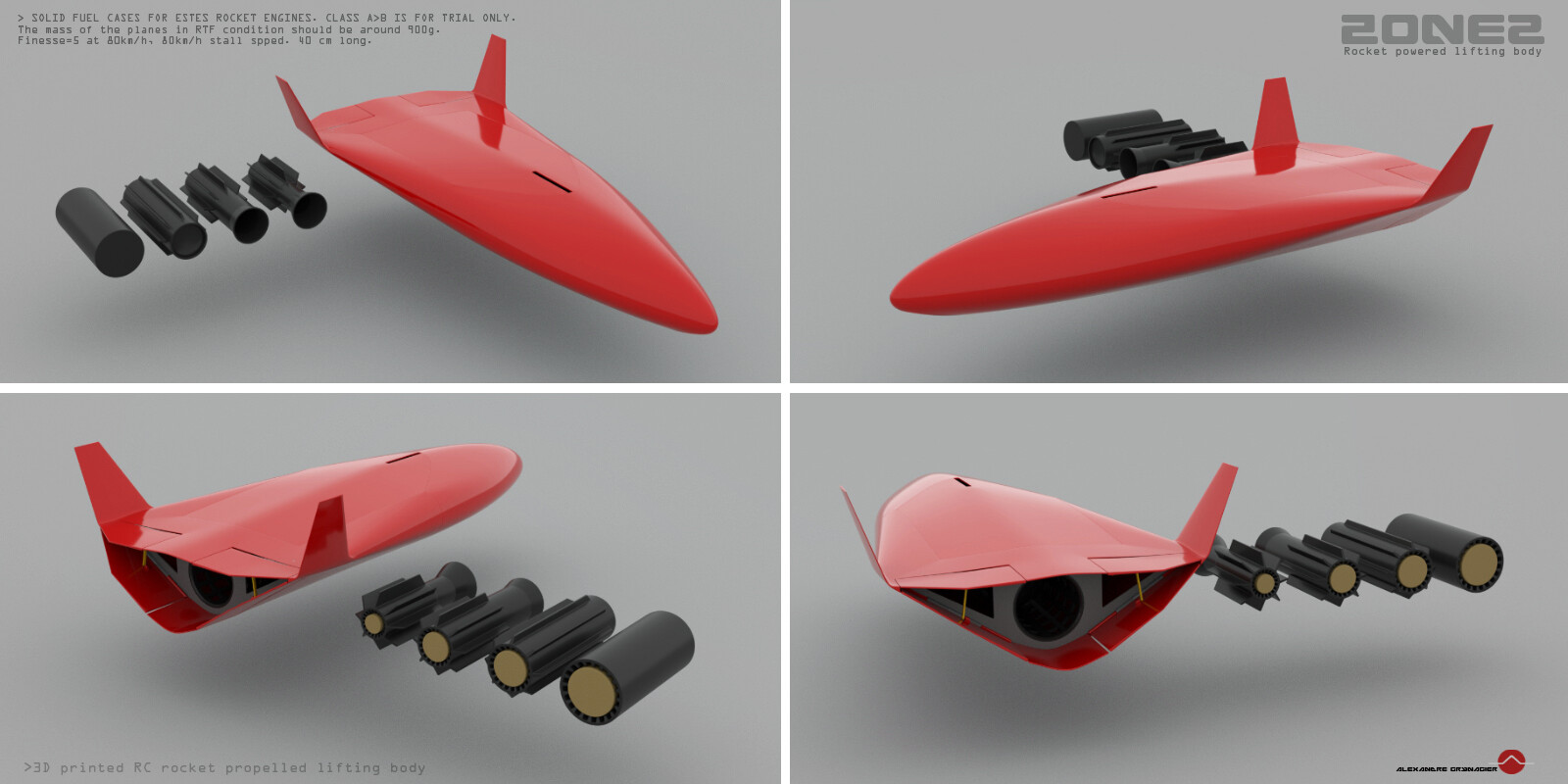
Engine cases for various ESTES solid fuel boosters. The smallest ones are for trial runs only, since the plane outweights the capabilities of the smallest ones.

To view. i didn't add turbulators on this one, as the scale should help. The hole on top is to help adjust the plane's center of gravity, and should be obtured using tape.
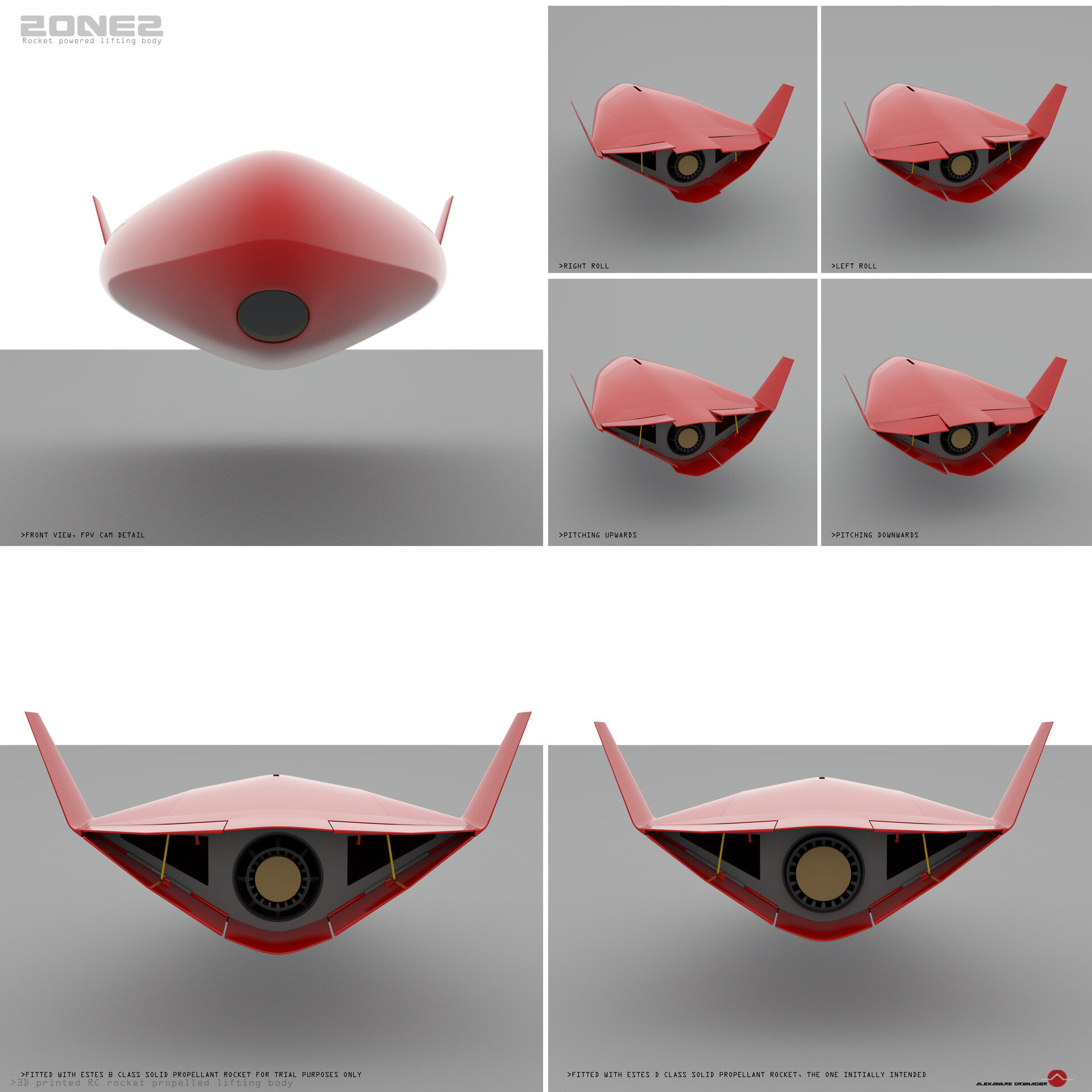
The camera is facing downwards at a -10° angle as the aircraft should evolve from alpha=0 (rocket propulsion) to alpha =20° (glide)

Here is a comparision with rctestflight early concept of a lifting body.
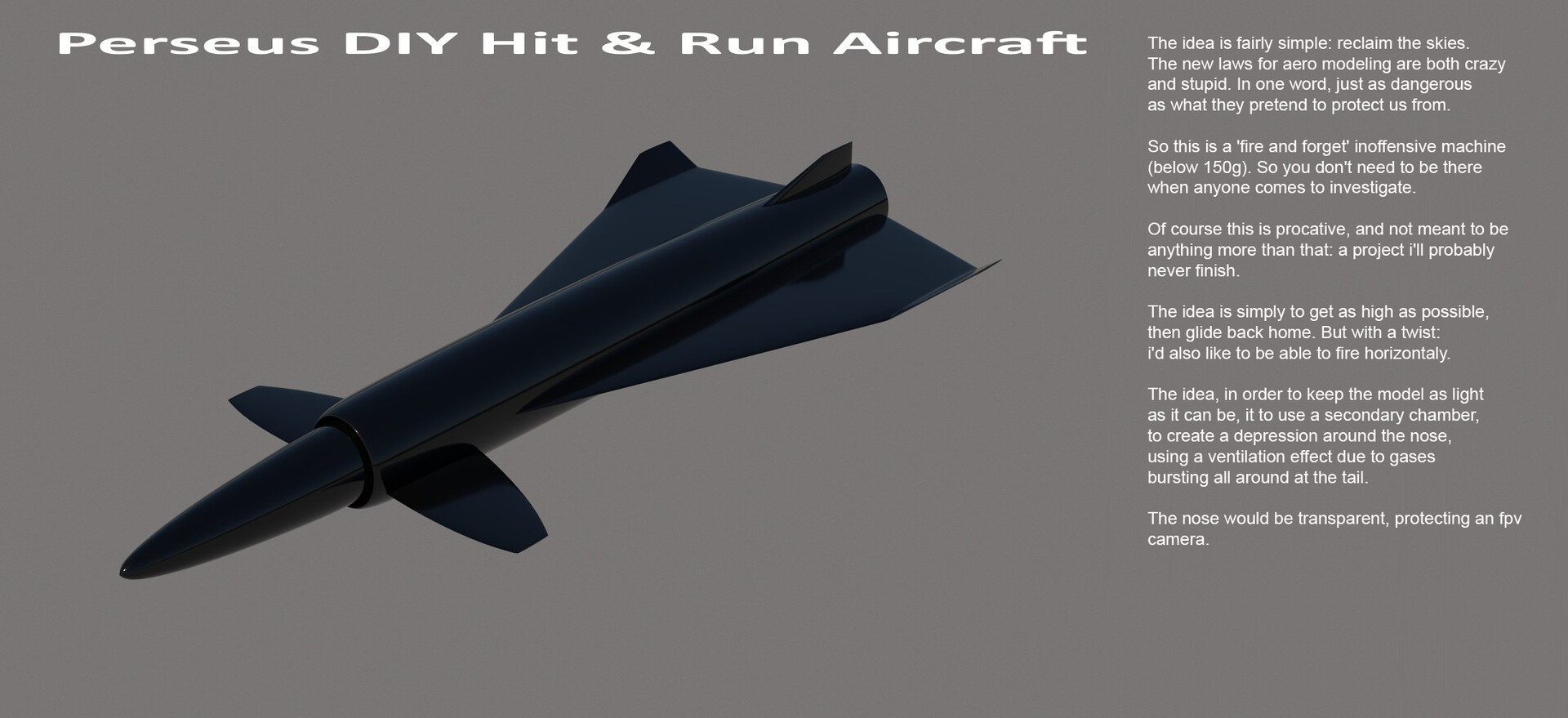
A prototype idea...